- 1 year ago
- Dhwajastambam
- Description
- FAQ
- Updates
- Comments
"O Divine Lord, standing tall on the Dwajasthambam, your
presence fills this temple with light and grace. May the flag you bear flutter
forever, bringing victory, protection, and divine harmony to our lives."
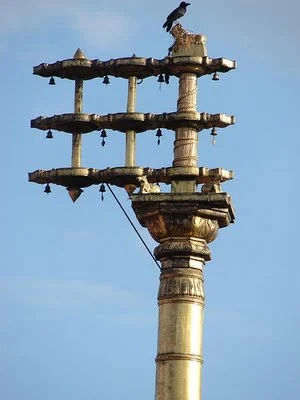
The Dwajasthambam is a
significant and sacred feature in Hindu temples, symbolizing the divine
presence and devotion of the devotees. Serving as the temple flagpole, it stands tall at the entrance or in the
courtyard, marking the temple’s sanctity and spiritual importance. The
Dwajasthambam is not just a physical structure; it represents the connection between heaven and earth, serving as a
spiritual axis through which divine energies are
invited into the temple.
The name Dwajasthambam comes
from the words "Dwaja"
meaning flag and "Stambha"
meaning pillar or pole. It is traditionally a vertical structure that bears a sacred flag representing the temple’s deity or the
divine force presiding over the place of worship. The Dwajasthambam serves as
an important focal point in the temple, and its presence is essential to
maintain the sacred energy within the temple complex.
Spiritual
Significance of Dwajasthambam
The Dwajasthambam holds profound spiritual
symbolism. It signifies the divine
presence in the temple and serves as a visual reminder of the
Lord’s eternal protection over the temple and its devotees. Standing as an
embodiment of divine energy, the Dwajasthambam marks the temple as a place
where heavenly forces converge, and
where spiritual seekers can access
the presence of the divine. It serves as a powerful spiritual conduit, inviting cosmic energies into the temple premises, enhancing
the sanctity and vibrancy of the temple environment.
Symbolism
of Victory and Protection
One of the primary symbols associated with the Dwajasthambam is victory.
The flag hoisted on the pole typically carries the emblem of the temple’s main deity, signaling that the temple is under the divine protection of the Lord. It symbolizes the
triumph of good over evil, as the flag is often seen as a
symbol of victory in battle, particularly
in the context of the battle between dharma (righteousness)
and adharma (unrighteousness).
By hoisting the flag on the Dwajasthambam, the temple represents the
divine will and assures
devotees that the forces of righteousness
will prevail, protecting them from negative influences. It acts as a spiritual sentinel, watching over the devotees and
the temple space, keeping away any form of negativity
or evil.
The
Connection Between Heaven and Earth
The Dwajasthambam is also a
symbol of the connection between the earthly realm
and the divine realm. Standing tall and
proud, it forms an axis that links the devotee's prayers on earth with the
divine forces in the heavens. As the temple's flag flutters atop the pole, it
is believed to transmit the prayers and offerings of the devotees to the higher
realms, carrying their spiritual aspirations to the divine.
The pole serves as a sacred pillar that
unites the physical and spiritual worlds, embodying the temple's function as a
conduit for divine blessings. The vertical nature of the Dwajasthambam
signifies elevation of the soul,
reminding devotees of their journey towards spiritual ascension.
Cultural
and Ritual Importance
The Dwajasthambam is not
only an architectural feature but also a focal point during important temple rituals and festivals.
The flag-hoisting ceremony is a
significant event in many temples, particularly during festivals or on auspicious days. It is accompanied
by prayers, chants, and offerings, marking the start of a divine celebration.
The raising of the flag is considered an invocation of divine blessings,
filling the atmosphere with sacred vibrations.
The pole also plays a central role in the Abhishekam (ritual bathing) of the deity during
festivals or special occasions. Devotees circumambulate
the Dwajasthambam as part of their worship, expressing reverence and devotion
to the divine. It is considered auspicious to be in close proximity to the
flagpole, as it is believed to absorb the cosmic vibrations of the Lord,
purifying and energizing those who seek blessings.
No Update Found
Login To Leave a Comment

Comments (0)